
Big Toe Pose (Padangusthasana) and Its Benefits
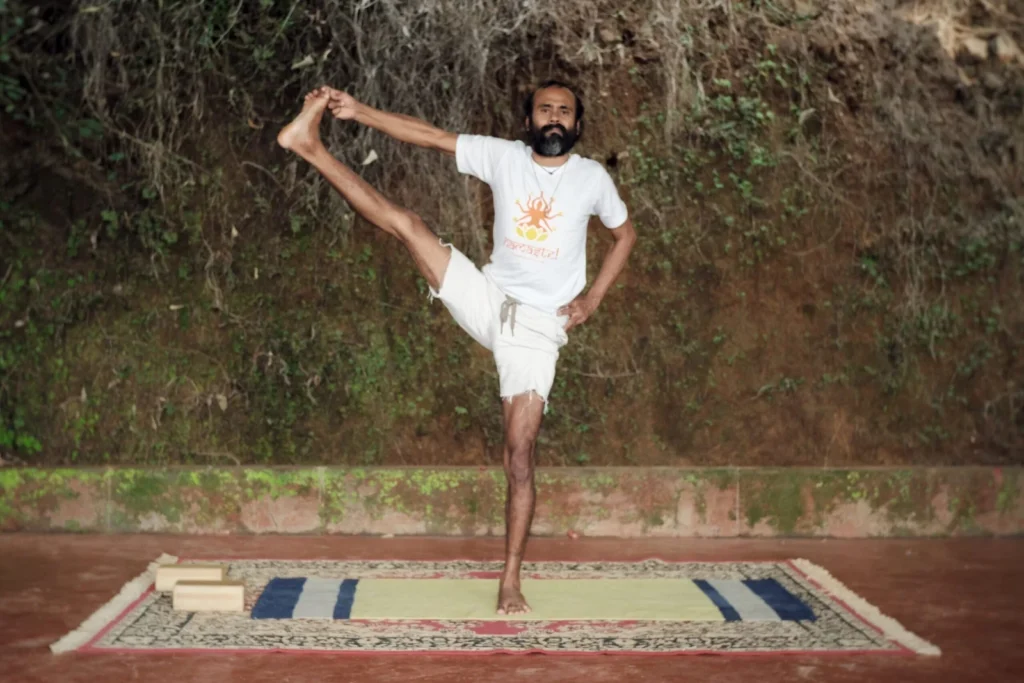
Big Toe Pose, also known as Padangusthasana or Hand-to-Big-Toe Pose, is a more challenging variation of Uttanasana (Standing Forward Fold Pose). This pose stretches the hamstrings, strengthens the core, and improves balance while promoting flexibility in the hips, knees, shoulders, and ankles.
Grasping the big toe with the index, middle finger, and thumb while pulling the head toward the knees engages the core and stretches the gluteal muscles effectively.
Steps for Hand-to-Big-Toe Pose
-
Begin in Tadasana (Mountain Pose) with feet together or hip-width apart and hands on your hips.
-
Exhale and tilt your hips forward. Keep the front torso long as you bend forward.
-
Keep your knees straight and wrap the index, middle fingers, and thumb around your big toes (yogi grip).
-
Inhale to lift your torso slightly, creating a concave shape in your back. Exhale to fold deeper, bending elbows to the sides if necessary.
-
Draw shoulder blades down your back, lift sitting bones, and plant heels firmly on the ground.
-
With each inhale, slightly lift your torso; with each exhale, release deeper into the bend.
-
Let your head hang naturally between your shoulder blades. Pause for 20 seconds.
-
Release the toes, bring hands to hips, and rise with a flat back to exit the pose.
Benefits of Padangusthasana
Stretches, Strengthens, and Lengthens
-
Lengthens the back muscles and hamstrings.
-
Engages quadriceps, gluteal muscles, and calves.
-
Strengthens shoulders, arms, and neck.
Flexibility and Range of Motion
-
Improves hip, spine, shoulder, and neck flexibility.
-
Enhances balance and stability in forward bends.
-
Supports deeper spinal stretch compared to Uttanasana.
Chest, Diaphragm, and Breath
-
Inversion improves blood flow to chest and lungs.
-
Enhances lung capacity and breath awareness.
-
Supports diaphragm expansion and reduces risk of muscle injuries.
Awareness, Concentration, and Posture
-
Encourages focus on breath and body alignment.
-
Aligns hips, knees, and ankles symmetrically.
-
Strengthens the spine and helps correct hunchbacks.
Stress Relief and Energy Boost
-
Releases tension in head, neck, and back.
-
Promotes prana flow and detoxification.
-
Reduces anxiety and energizes the body.
Organ Stimulation
-
Stimulates pineal, pituitary, thyroid, adrenal, and pancreatic glands.
-
Supports liver, kidney, and abdominal organ function.
-
Encourages healthy digestion and endocrine balance.
Emotional Balance
-
Promotes harmony between body and mind.
-
Inversion improves blood flow to the brain and heart.
-
Reduces anxiety and calms the nervous system.
Precautions and Contraindications
Recent Injuries or Surgeries
-
Avoid if you have hip, knee, ankle, spine, shoulder, or abdominal injuries.
-
People with herniated discs should avoid deep forward bends.
Physical Limitations
-
Practice Uttanasana first to warm up muscles.
-
Move slowly when stretching, especially if joints or hamstrings are tight.
Special Populations
-
Pregnant women, older adults, children, and menstruating women should use caution.
-
Avoid long holds if you have sciatica, piriformis syndrome, or plantar fasciitis.
Warm-Up Recommendations
-
Uttanasana (Standing Forward Bend)
-
Tadasana (Mountain Pose)
-
Gentle Hamstring Stretches