
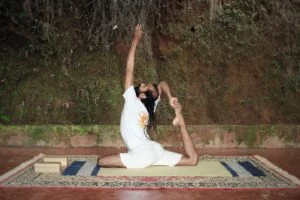
Different Ways to Try Pigeon Pose
One of the most challenging yoga poses is Eka Pada Rajakapotasana, popularly called the King Pigeon Pose. Its name comes from the Sanskrit words eka (“one”), pada (“foot”), raja (“king”), and kapota (“pigeon”). For many practitioners, this one-legged pose provides a deep hip opening.
Your body’s movement centers on your hips. Opening this area increases your range of motion, improves circulation to your lower extremities, and helps you feel more at peace during meditation, seated poses, and daily life.
King Pigeon Pose often brings emotions to the surface because it opens both the hips and the heart. You’ll benefit most if you manage this vulnerability with awareness. Trust your body and mind—you will know when you’re ready to practice it safely.
When performed with humility and attention, this posture improves flexibility, confidence, inner strength, and self-love. Focus on careful alignment and breathing, and take your time exploring the pose.
Benefits of Eka Pada Rajakapotasana
Anatomical Benefits
Muscles: This pose strengthens and tones muscles throughout the body, including the pelvis, hamstrings, lower back, hips, thighs, psoas, abdomen, chest, shoulders, and calves.
Health Advantages
Organs: The abdominal and psoas muscles stimulate internal organs, enhancing the function of the pancreas, liver, and kidneys. Strengthened pelvic muscles support reproductive health, while expanded chest muscles improve heart and lung function. The neck stretch helps the thyroid function efficiently.
Symptom Relief
This pose alleviates leg cramps, eases sciatic nerve tension, reduces neck stiffness, and improves lower back discomfort. It supports digestion, relieves menstrual cramps, and restores spinal balance, aiding neurological health.
Therapeutic Applications
King Pigeon Pose may normalize thyroid function, support uterine health, strengthen immunity, and relieve back pain.
Contraindications
Avoid this pose if you have:
-
Severe shoulder, hip, knee, or ankle injuries
-
Weak digestive organs or recent abdominal surgery
-
Pregnancy
-
Severe asthma or heart issues
-
Osteoporosis
-
Severe depression or anxiety
Beginner practitioners should practice easier versions of pigeon pose first, ideally under a professional instructor.
5 Ways to Try the Pigeon Pose
1. Traditional Pigeon Pose
-
Begin in Downward-Facing Dog (Adho Mukha Svanasana).
-
Place your right foot behind your right wrist. Lower the right knee behind your hand.
-
Slide your left foot back until the leg is straight.
-
Adjust your front knee for comfort and external rotation.
-
Press your front foot firmly into the mat.
-
Keep your torso upright or fold toward the front leg for a deeper stretch.
2. Pigeon Pose with a Bolster
-
Spread a bolster horizontally several feet behind your hands in Downward-Facing Dog.
-
Lower your right thigh or glutes onto the bolster.
-
Fold forward for a deeper hip stretch or stay upright to support the torso.
3. Pigeon Pose with a Chair
-
Place hands on a chair’s edge from Downward-Facing Dog.
-
Position a bolster across the seat and rest your front leg on it.
-
Adjust your hips and back leg for comfort and deeper stretching.
4. Seated Pigeon Pose
-
Sit on the edge of a chair or mat, feet hip-width apart.
-
Cross your left thigh over the right ankle.
-
Spread your toes and press through the foot edges to engage the muscles.
-
Fold forward for deeper stretching or remain upright with hands on hips.
5. Reclining Pigeon Pose
-
Lie on your back, knees bent, feet flat.
-
Cross your left thigh over your right ankle.
-
Hold your thigh or shin to bring the leg closer, deepening the hip stretch.
-
Keep your other leg active by flexing the foot.