
Salabhasana (Locust Pose) – Strengthen the Back, Legs, and Arms
Introduction:
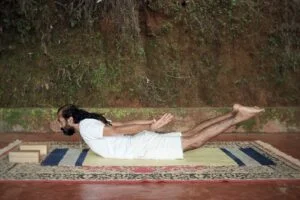
Salabhasana, or Locust Pose, is a prone balancing yoga posture that strengthens the back, core, legs, and arms. The pose prepares beginners for deeper backbends while improving posture, flexibility, and energy. Its Sanskrit name, “Shalabhasana,” means “grasshopper,” reflecting the body’s shape during the pose.
Steps to Practice Salabhasana (Locust Pose)
-
Lie on your stomach with your arms by your side and forehead on the mat.
-
Exhale and engage your lower back by pressing the pubic bone into the floor and drawing your navel toward the spine.
-
Activate your leg muscles.
-
Inhale and lift your head, chest, arms, and legs off the ground. Press your shoulder blades against your back to open your chest.
-
Keep your feet hip-width apart and aligned near the midline.
-
Maintain calm, steady breathing for five breaths.
-
Exhale and gently lower down. Repeat 2 more times.
-
Rest between repetitions by forming a cushion with your arms and slightly separating your heels.
Benefits of Salabhasana (Locust Pose)
1. Stretch, Strengthen, and Lengthen
Salabhasana engages the spine, core, legs, hips, and upper torso. It stretches quadriceps, hamstrings, psoas, and shin muscles while toning glutes and thighs. Abdominal compression strengthens core muscles and can help reduce belly fat.
2. Improve Flexibility and Range of Motion
This prone backbend improves flexibility in the spine, hips, and legs. Regular practice strengthens muscles and joints, enhancing overall mobility. Variations include Locust Pose with hands bound or hands behind the head.
3. Enhance Chest, Diaphragm, and Breath
This pose opens the chest and expands the upper and mid-back. Maintaining breath awareness increases heart rate slightly, providing a mild cardio effect.
4. Boost Focus and Concentration
Lifting the upper and lower body simultaneously requires balance and core strength. Coordinating breath with movement improves focus and mind-body awareness.
5. Align Posture and Build Strength
Salabhasana strengthens the back, core, shoulders, chest, legs, and arms, preparing the body for deeper backbends. It promotes stability, alignment, and muscle tone.
6. Energize, Relax, and De-stress
The full-body stretch loosens muscles from fingers to toes, energizing the nervous system and reducing stress. Practicing this pose leaves you feeling relaxed, light, and mentally balanced.
7. Stimulate Systems, Organs, and Circulation
Salabhasana stimulates the thyroid, digestive system, and parasympathetic nerves in the lower back. It enhances blood flow, strengthens the core and lumbar spine, and supports reproductive health and joint function.
8. Therapeutic Benefits
This pose may help manage diabetes, thyroid imbalance, osteoporosis, lower back pain, sciatica, constipation, and flatulence. It supports menstrual health and improves abdominal organ function.
9. Balance and Emotions
Salabhasana activates the root, solar plexus, and sacral chakras, improving stability, creativity, and emotional balance. It also engages the throat and heart chakras, enhancing communication and confidence.
10. Others
This pose benefits adults, teenagers, athletes, swimmers, and deep-sea divers by strengthening back muscles and improving breathing under chest constriction. It serves as a preparatory posture for advanced backbends.
Contraindications
-
Avoid with ankle, knee, hip, pelvis, rib cage, shoulder, or spine injuries.
-
Post-surgery students should consult a doctor before practicing.
-
Avoid if you have severe sciatica, heart conditions, asthma, peptic ulcers, or severe menstrual problems.
-
Pregnant or postpartum women should avoid this posture.
-
Seniors should practice with caution to prevent strain.