
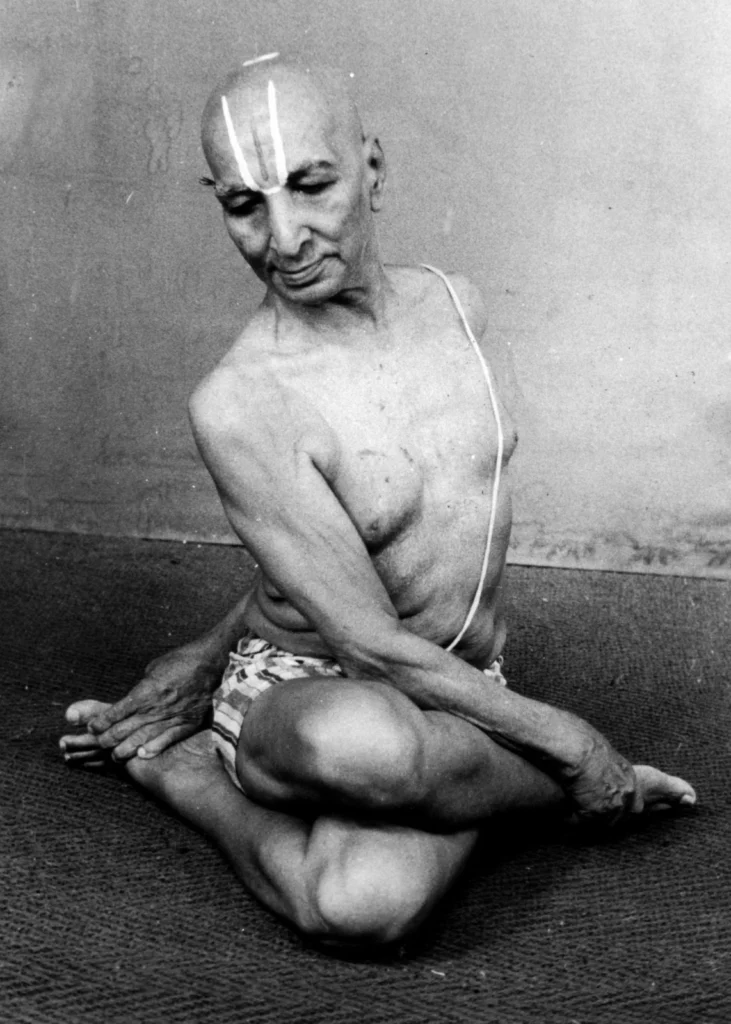
Tirumalai Krishnamacharya: The Father of Modern Yoga
Sri Tirumalai Krishnamacharya (1888–1989) is widely regarded as the father of modern yoga. Without his vision, teachings, and persistence, influential yoga styles like Ashtanga Yoga, Vinyasa Yoga, and Viniyoga may not exist today. His work preserved ancient yogic wisdom and bridged it to modern times, making yoga accessible to global practitioners.
Historical and Religious Context
In the late 19th and early 20th centuries, yoga was in decline in India. It faced criticism from:
- Orthodox Hindu society, which viewed it as too body-centered and unspiritual.
- British colonial rulers, who aimed to replace Indian traditions with Western values.
- Christian missionaries, who saw yoga as heretical and pagan.
During this era of cultural suppression, Krishnamacharya emerged as a torchbearer for yoga’s revival.
Early Life and Education
Krishnamacharya was born on August 11, 1888, into a Brahmin family with deep spiritual roots. His father was a Sanskrit scholar and Vedic teacher. By the age of five, Krishnamacharya had undergone the Upanayanam (sacred thread ceremony) and started studying sacred texts and yoga.
After his father’s death, his formal studies continued in Mysore, where he deepened his knowledge in philosophy, Vedic literature, and yoga.
Himalayan Studies with Rama Mohan Brahmachari (1916–1924)
In 1916, Krishnamacharya undertook a pilgrimage to the Himalayas, eventually studying under Yogeshwara Rama Mohan Brahmachari near Mount Kailash for seven and a half years.
Here, he:
- Mastered asana, pranayama, and vinyasa krama
- Studied the Yoga Sutras of Patanjali, Yoga Korunta, and other classical texts
- Learned yoga therapy, mantra chanting, and yogic philosophy
This period shaped his future teaching and therapeutic approach.
The Mysore Years (1924–1955)
Krishnamacharya gained widespread recognition after being invited by the Maharaja of Mysore, Krishna Raja Wadiyar IV, to teach yoga. With royal support, he established a yoga school in Mysore and trained some of his most famous students:
- Pattabhi Jois – founder of Ashtanga Yoga
- B.K.S. Iyengar – founder of Iyengar Yoga
- Indra Devi – the first Western woman taught by him
- BNS Iyengar – teacher of traditional Ashtanga
He performed astounding demonstrations like stopping his heartbeat, breaking iron chains, and lifting weights with his teeth—showcasing the immense power of yogic mastery.
Later Years in Chennai (1957–1989)
After the yoga school in Mysore closed, Krishnamacharya relocated to Chennai, where he refined a more therapeutic and individualized approach to yoga.
He taught:
- T.K.V. Desikachar (his son and key disciple)
- T.K. Sribhashyam
- A.G. Mohan
- Srivatsa Ramaswami
He became known for yoga therapy, treating people with ailments using personalized asanas, breathwork, mantra, and Ayurvedic principles.
Key Contributions of Krishnamacharya
1. Vinyasa Krama
He introduced the concept of Vinyasa Krama, a systematic progression of yoga poses coordinated with the breath, designed to meet individual needs.
2. Individualized Teaching
Krishnamacharya believed, “Yoga must be adapted to the individual, not the individual to yoga.”
His yoga was never one-size-fits-all—each student received a personalized practice based on health, age, lifestyle, and spiritual goals.
3. Yoga as Therapy
Long before “yoga therapy” became a term, Krishnamacharya was healing people from:
- Diabetes
- Heart disease
- Asthma
- Neurological disorders
His therapeutic model used asana, pranayama, mantra, diet, and lifestyle changes.
4. Preservation of Texts
He revived ancient yogic texts like:
- Yoga Rahasya by Nathamuni
- Yoga Korunta
- Yoga Sutras (central to his teachings)
Even late in life, he studied these scriptures and passed their wisdom on to his students.
5. Empowerment of Women
Krishnamacharya was among the first Indian teachers to teach yoga to women and Westerners, breaking rigid taboos of the time. His student Indra Devi brought yoga to Hollywood in the 1940s.
Legacy
Krishnamacharya never called himself a “guru.” His humility, scholarship, and practical genius made him one of the most influential yoga teachers in history.
His students—including Pattabhi Jois, B.K.S. Iyengar, T.K.V. Desikachar, and Indra Devi—each developed distinct yoga styles. Yet, their roots trace back to the same source: Krishnamacharya’s teachings.
Today’s yoga landscape, from Ashtanga and Iyengar to Viniyoga and therapeutic yoga, carries the imprint of his wisdom.
Final Years and Death
Even at the age of 96, Krishnamacharya practiced yoga daily and healed himself without surgery after a serious fall. He passed away peacefully on November 3, 1989, at the age of 100, leaving behind a legacy that continues to shape yoga across the globe.
Conclusion: A Timeless Master of Yoga
Sri Tirumalai Krishnamacharya was more than a yoga teacher—he was a visionary, healer, scholar, and preserver of India’s spiritual heritage. Through his tireless work, yoga evolved from a forgotten tradition to a global movement for physical, mental, and spiritual transformation.