
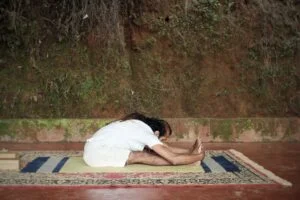
Head To Knee Pose and Its Benefits
The words “Janu,” “Sirsa,” and “asana,” which translate to “knee,” “head,” and “posture” respectively, are derived from Sanskrit.
This forward-folding position involves bringing the head to the knee and bending the upper torso from the hips. It is regarded as an excellent hip opener and hamstring stretch.
It helps to boost energy in the body, making it a great addition to flow yoga sequences.
Head to Toe Yoga Steps:
- Adjust the flesh under your seat to ensure your sit bones are firmly grounded. Flex your left knee and bring the sole of your left foot to touch the inside of your right thigh.
- Extend your right leg straight in front of you with your torso squared forward. Tilt your pelvis forward and walk your hands around the extended leg toward your right foot, initiating the bend from your hips rather than your lower back.
- Flex your right foot and press the back of your right thigh toward the floor. Once you’ve folded forward as far as you can, you have two options:
- Keep your spine straight and your neck long in an active position.
- Or allow your heart to soften and your head to move toward the extended leg, allowing the spine to round. Choose the variation that feels most comfortable.
- If your hands can reach your foot, hold it. If not, place your hands on the floor or hold your calf or ankle.
- Inhale to lengthen the spine. Exhale to deepen the forward bend.
- Stay for 5 to 10 breaths in this position. Then, straighten both legs, shake them out, and switch sides.
Head To Knee Pose Benefits:
1. Strengthening and Stretching
This pose stretches the shoulders, spine, hamstrings, neck, abdominal muscles, and groins. These muscles become stronger and more flexible through consistent practice.
2. Stimulates the Body’s Organs
Pressure applied to various points on the soles of the feet—similar to acupressure—stimulates internal organs such as the liver, pancreas, kidneys, uterus, stomach, and spleen.
3. Improves Digestion
By squeezing the lower abdomen against the thighs, this pose stimulates abdominal organs, supporting better digestion.
4. Mental Relaxation and Reduced Anxiety
Like many forward-bending poses, Janu Sirsasana has a calming effect on the mind. Resting your head on the knee creates a deep sense of relaxation. With regular practice, breathing becomes rhythmic and natural, easing both physical and mental stress.
5. Reduces Sciatica and Enhances Nerve Function
This pose can help reduce symptoms of sciatica. Slow, steady breathing increases blood flow to the sciatic nerve, easing lower back and leg pain.
6. Enhances Spine and Lower Back Flexibility
The forward bend opens the lower back and stretches the surrounding muscles. It also improves spinal flexibility, which is essential for many other yoga poses.
7. Eases Menstrual Discomfort
Practicing this pose a few days before menstruation can ease symptoms such as abdominal heaviness by relaxing the lower abdominal muscles.
8. Improves Lung Function
Long, deep breaths during practice bring fresh blood to the diaphragm and lungs, strengthening the chest and improving lung health.
9. Ideal for Runners
The hamstring and hip stretch in this pose help relieve muscle fatigue after running and prepare the muscles before a run. It is beneficial both pre- and post-run.
10. Encourages Balance and Harmony
This pose balances both sides of the hips and lower back. It helps open the stiffer side, creating symmetry and improved mobility.
Head To Knee Pose Modifications:
- Use a Blanket Under the Knee: If you have trouble straightening the leg, placing a folded blanket under the knee can provide support and ease forward movement.
- Support for Stiff Lower Back or Hips: Sit on a folded blanket or yoga block if your hips or lower back restrict forward bending. This improves alignment and makes the stretch more effective.
- Use a Strap: If reaching the foot is difficult, loop a yoga strap around the foot of the extended leg to assist the stretch.
Head To Knee Pose Contraindications:
- Severe Lower Back Pain: Be cautious. One side of the hips or back may be stiffer, and forcing a forward bend may worsen the injury. Listen to your body and avoid deep stretches if painful.
- Knee Injuries: Stretching behind the knee may aggravate an existing injury. Injured knees may not support the hamstring well, increasing tension and stiffness. Practice with care or under guidance.
- Pregnancy: Avoid forward bends during pregnancy as they put pressure on the lower abdomen.
- Neck or Shoulder Injuries: If you have injuries in these areas, the forward pull may be challenging. Modify or avoid the pose to prevent strain.