
How to Practice Bridge Pose (Setu Bandhasana)
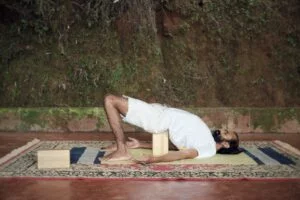
The Sanskrit term Setu Bandhasana means setu = bridge and bandha = bind/lock. Also known as Bridge Pose or Setu Bandha Sarvangasana, this yoga posture resembles a bridge. Beyond physical alignment, it encourages connection with your inner self and promotes harmony.
Steps for Bridge Pose
-
Starting Position
Lie on your back with knees bent, feet flat, and hip-width apart. Keep heels directly behind the knees. Place upper arms alongside your ribs, elbows bent, and palms facing each other. -
Lift the Chest
Press your shoulder blades into your upper back and lift your chest. Push elbows and shoulders down while wrapping your arms toward the floor. Keep your gaze vertical. -
Raise the Hips
Press into your feet and slowly lift your hips toward the ceiling. Keep thighs parallel to the floor. Lengthen the tailbone toward the back of your knees. -
Engage Shoulders and Arms
Bring shoulder blades closer together and extend arms under your body, interlacing your fingers. Straighten your elbows and lift your sternum while maintaining space between your neck and the mat. -
Hold and Breathe
Take slow, deep breaths while maintaining the pose. Relax your glutes and keep your core engaged. -
Release Safely
Unlace your fingers and slowly lower your torso back to the floor.
Benefits of Bridge Pose
Strengthens, Lengthens, and Stretches
Bridge Pose strengthens quadriceps, hamstrings, glutes, and pelvic muscles. It stretches the chest, neck, and hip flexors. A tucked abdomen supports the lumbar spine.
Improves Flexibility and Posture
Using the shoulders and legs as support, this pose elevates the lower and middle back. It improves hip stability, spinal alignment, and posture.
Supports Chest, Diaphragm, and Breathing
With the shoulders grounded, the chest opens, increasing lung capacity. The diaphragm stretches naturally without interrupting breath.
Enhances Awareness and Focus
Bridge Pose requires concentration on physical alignment, breathing, and posture. This awareness relieves tension and improves mindfulness.
Stimulates Organs and Nervous System
It relaxes the musculoskeletal system, calms the mind, and promotes neural health.
Balances Emotions and Chakras
This posture aligns the throat, root, sacral, and manipura chakras. Mind-body harmony improves emotional stability.
Suitable for All Ages
Athletes, postnatal women, teenagers, and runners benefit from this pose. It prepares practitioners for advanced backbends like Wheel Pose, Plough Pose, and Shoulderstand.
FAQs
Contraindications
Avoid Bridge Pose if you have:
-
Neck or back disc inflammation
-
Knee or hip issues
-
Uncontrolled high blood pressure
-
Glaucoma or detached retina
-
Menstrual period (supported bridge)
Tips for Practicing Bridge Pose
-
Repeat 2–3 rounds in Vinyasa classes to deepen the stretch.
-
Press your feet into the mat for higher hip lift.
-
Direct breath into your lower abdomen to stay relaxed and maintain the posture.
-
Relax the glutes while using legs to lift hips.
-
Take slow, deep breaths throughout the pose.