
Table of Contents
Togglevata pitta kaphaKnow Your Doshas – Vata, Pitta, Kapha
Dosha and Ayurveda are closely intertwined concepts in traditional Indian medicine. Ayurveda is an ancient system of healing practiced for thousands of years, focusing on maintaining balance and harmony within the body, mind, and spirit.
According to Ayurveda, every individual has a unique constitution, or prakriti, which is determined by the balance of the three doshas: Vata, Pitta, and Kapha. Each dosha reflects specific physical and emotional characteristics. Imbalances in these doshas can lead to health issues.
Ayurveda works to restore balance through a holistic approach including:
- Dietary and lifestyle changes
- Herbal remedies
- Massage and therapies
By identifying your dominant dosha and addressing imbalances, Ayurveda helps you achieve optimal health and well-being.
How Ayurveda Uses Doshas in Treatment:
- Diet: Vata-dominant individuals are advised to eat warm, easy-to-digest foods. Pitta types benefit from cooling, less spicy foods.
- Herbs: Ashwagandha balances Vata; Shatavari helps manage Pitta.
- Massage (Abhyanga): Warm herbal oils and specific massage techniques calm and balance doshas while promoting relaxation.
Types of Doshas in Ayurveda
Vata Dosha
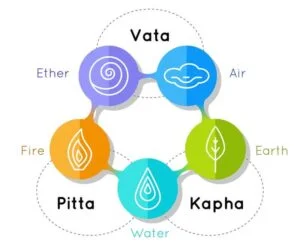
Vata represents the energy of movement, related to the elements of air and space. It governs functions like breathing, circulation, and nerve impulses.
Common Vata Traits:
- Creative, energetic, quick-thinking
- Prone to anxiety and restlessness
Signs of Vata Imbalance:
- Dry skin and hair
- Irregular digestion, bloating, gas
- Constipation
- Joint pain and stiffness
- Insomnia
- Restlessness
Pitta Dosha
Pitta governs transformation and metabolism, associated with fire and water. It controls digestion, absorption, and assimilation.
Common Pitta Traits:
- Focused, determined, ambitious
- Prone to anger and irritability
Signs of Pitta Imbalance:
- Sensitivity to heat
- Acne, rashes, inflammation
- Acid reflux, heartburn
- Irritability
- Intense hunger/thirst
- Perfectionism
Kapha Dosha
Kapha provides structure and stability, linked to earth and water elements. It supports growth, lubrication, and immunity.
Common Kapha Traits:
- Calm, compassionate, grounded
- Prone to lethargy and weight gain
Signs of Kapha Imbalance:
- Weight gain, water retention
- Fatigue, sluggishness
- Sinus congestion
- Depression
- Slow digestion
- Oversleeping
Dosha Combinations
Most people have a mix of two or three doshas, with one or two being dominant.
- Vata-Pitta: Lean build; may experience anxiety, dry skin, and indigestion. Energetic and quick learners but may be impatient.
- Vata-Kapha: Lean but gain weight easily. Prone to dry skin, constipation, and congestion. Imaginative, but may struggle with procrastination.
- Pitta-Kapha: Medium build; may develop skin rashes, acid reflux, and sinus issues. Ambitious and organized, but can be stubborn.
- Vata-Pitta-Kapha: Balanced mix of all three doshas. May show characteristics and imbalances of all types—creative, adaptable, but emotionally sensitive.
Ayurvedic Treatment & Lifestyle
Your unique dosha constitution is shaped by various factors, including diet, lifestyle, and environment. Ayurvedic treatment aims to balance your doshas and restore harmony.
This can be achieved through:
- Diet and nutrition
- Herbal medicine
- Yoga and exercise
- Massage and relaxation techniques
FAQ on Doshas in Ayurveda
Q: What are doshas in Ayurveda?
A: Doshas are the three primary energies—Vata, Pitta, and Kapha—that govern all bodily and mental processes.
Q: How do doshas affect our health?
A: An imbalance in doshas can lead to physical or mental health problems. Knowing your dosha can help you make the right lifestyle and diet choices.
Q: Can a person have more than one dosha?
A: Yes, most people have a combination of two or three doshas, with one or two being dominant.
Q: How can I determine my dosha type?
A: You can take an Ayurvedic dosha quiz or consult an Ayurvedic practitioner. Observing physical and mental traits can also help.
Q: What are common recommendations for each dosha?
- Vata: Warm, cooked foods; stick to a routine; avoid cold or raw items.
- Pitta: Eat cooling, less spicy meals; avoid heat; get adequate rest.
- Kapha: Light, dry foods; stay active; limit sweets and heavy dishes.
Q: How can I balance my doshas?
A: By following an Ayurvedic lifestyle with proper diet, regular yoga, meditation, and herbal remedies. A practitioner can guide you based on your constitution.