Table of Contents
TogglePincha Mayurasana (Feathered Peacock Pose) – Boost Circulation, Calm Mind, and Improve Digestion
Introduction:
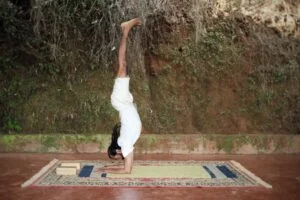
Pincha Mayurasana, also called Feathered Peacock Pose, strengthens the shoulders, arms, core, and back while enhancing balance and concentration. The pose resembles a peacock lifting its tail, showcasing beauty and strength.
Steps to Practice Pincha Mayurasana
-
Begin in Adho Mukha Svanasana (Downward-Facing Dog Pose).
-
Lower your forearms to the floor, aligning them under your shoulders.
-
Keep your elbows shoulder-width apart.
-
Lift your head slightly while moving your legs toward your head. Keep forearms and upper arms at 90 degrees.
-
Bend your right knee and spring onto it, keeping your left heel grounded.
-
Once balanced, lift the left leg as well.
-
Extend both legs upward, keeping the core engaged and navel drawn in.
-
Hold for 15–20 seconds, gradually increasing duration with practice.
-
Lower the right leg first, then the left, returning to Adho Mukha Svanasana.
Benefits of Feathered Peacock Pose
1. Strengthen and Stretch Muscles
This pose strengthens the arms, shoulders, wrists, core, back, chest, thighs, and glutes. It stretches the neck, upper, and middle back, improving posture and upper-body strength.
2. Improve Flexibility and Mobility
Balancing on the forearms increases shoulder and spine flexibility. This prepares students for advanced arm balances and inversion poses.
3. Enhance Breathing and Chest Expansion
Although inversion limits deep breathing initially, it strengthens the diaphragm, opens the chest, and improves rib-cage mobility. Neck stretch activates the throat chakra, aiding clear breathing.
4. Build Awareness and Focus
Balancing in Pincha Mayurasana improves coordination and inward focus. Beginners may start with Half Feathered Peacock Pose to gradually develop awareness and stability.
5. Align Posture and Spine
Proper alignment—forearms parallel, elbows under shoulders, legs joined—enhances spinal alignment and overall posture. Beginners can use a block or strap for guidance.
6. Energize and De-stress
The inverted position boosts energy, stimulates circulation to the head, and releases tension in the neck, eyes, and ears. This increases confidence and reduces fatigue.
7. Stimulate Organs and Circulation
Engaging the core stimulates digestive and reproductive systems. Improved blood flow enhances thyroid function, calms the nervous system, and delivers oxygen-rich blood to eyes and brain.
8. Spiritual and Advanced Benefits
This pose activates the Ajna and Crown Chakras, supporting concentration (Dharana) and meditation (Dhyana). It also builds strength for advanced poses like Handstand, Scorpion, and Himalayan Duck Pose I.
Contraindications
-
Avoid if you have injuries in shoulders, neck, elbows, wrists, back, chest, spine, hips, or legs.
-
Students with weak joints, herniated discs, glaucoma, or acid reflux should not practice.
-
Avoid if experiencing asthma, cold, cough, or breathing disorders.
-
Pregnant women and women during menstruation should avoid the pose.
-
Beginners should practice with supervision and props to prevent strain.