
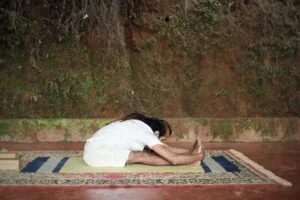
Paschimottanasana – Seated Forward Bend Pose
Paschimottanasana, or Seated Forward Bend Pose, is a foundational yoga posture that offers deep physical, emotional, and energetic benefits. “Paschima” means “west” in Sanskrit, symbolizing the back of the body, which experiences an intense stretch during this pose.
This posture involves folding the torso over the extended legs and resting the head toward the knees, symbolizing humility, inner focus, and graceful surrender.
How to Practice Paschimottanasana
- Start in Staff Pose (Dandasana): Sit with your legs extended straight and feet flexed.
- Inhale: Raise your arms overhead and lengthen your spine.
- Exhale: Hinge at your hips and begin folding forward, keeping the spine long.
- Lead with the chest: Think of your belly touching the thighs before the head reaches the knees.
- Grip options: Hold your shins, ankles, feet, or wrap a strap around the feet.
- Neck and spine alignment: Keep the spine extended; let the neck follow naturally.
- Breathe deeply: Use each exhalation to gently deepen the fold.
- Hold: Stay in the posture for 5–10 breaths or up to 2 minutes with mindful breathing.
Top Benefits of Seated Forward Bend Pose
1. Improves Flexibility
- Deeply stretches the hamstrings, calves, glutes, and lower back.
- Enhances range of motion in the hips and spine.
2. Strengthens and Tones
- Engages and strengthens the back, abdominal muscles, knees, and hip joints.
- Helps tone the belly and legs.
3. Promotes Better Posture
- Encourages proper spinal alignment.
- Counteracts the effects of prolonged sitting and hunching.
4. Calms the Mind
- Supports Pratyahara (withdrawal of senses).
- Reduces stress, anxiety, and fatigue.
- Encourages introspection and emotional balance.
5. Boosts Digestive & Reproductive Health
- Stimulates abdominal organs like liver, kidneys, ovaries, and uterus.
- Improves digestion, circulation, and hormonal balance.
6. Enhances Breath Control
- Opens the chest and diaphragm, encouraging deep, steady breathing.
- Improves lung capacity and oxygen flow.
7. Therapeutic Potential
- Helps relieve mild depression, sciatica, and menstrual discomfort.
- Can support conditions like hypertension, IBD, or infertility when practiced mindfully.
Energetic & Emotional Effects
Paschimottanasana activates and balances the Root (Muladhara), Sacral (Svadhisthana), and Solar Plexus (Manipura) chakras. With each exhalation, it promotes surrender, inner awareness, and emotional release, calming the nervous system and restoring mental clarity.
Contraindications and Precautions
- Avoid if you have: recent surgeries (abdomen, spine, hips), slipped discs, SI joint instability, severe sciatica, ulcers, hernias, or spinal injuries.
- Pregnancy: Not recommended due to abdominal compression.
- Heart or respiratory conditions: Approach with caution and under guidance.
- During menstruation: Practice gently with support like a bolster.
- Asthma or weak flexibility: Use props (straps, folded blanket under hips) and avoid over-straining.
Beginner Modifications
- Sit on a folded blanket to elevate hips.
- Use a strap around your feet to bridge the gap.
- Keep knees slightly bent if hamstrings are tight, and straighten gradually.
Level-Up Options
Once comfortable in Paschimottanasana, progress to:
- Seated Straddle Pose (Upavistha Konasana)
- Monkey Pose Forward Bend (Hanumanasana variation)
- Trianga Mukhaikapada Paschimottanasana
- Revolved Seated Forward Bend (Parivrtta Paschimottanasana)