
Prasarita Padottanasana – Wide-Legged Forward Bend
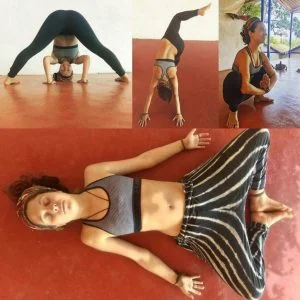
Prasarita Padottanasana Benefits, also known as the Wide-Legged Forward Bend Pose, is a beginner-friendly standing pose that combines forward bending with inversion. This posture strengthens the legs, stretches the spine, and helps relieve headaches by increasing blood flow to the head.
Steps for Prasarita Padottanasana
-
Begin in Tadasana (Mountain Pose) and step your feet wide apart, keeping them parallel. Find a secure and grounded stance.
-
Lift your inner arches by pressing your big toes and outer edges of the feet firmly into the floor. Draw your thighs upward and place your hands on your hips.
-
Inhale and lengthen your spine, expanding the chest.
-
Exhale and hinge forward at the hips while keeping a long back and open chest.
-
Place your hands on the floor or blocks halfway down, keeping your back straight. Hold for a few breaths.
-
If possible, deepen the fold by keeping your hands under your elbows, forearms perpendicular, and upper arms parallel to the floor.
-
Lower your head so the crown touches the floor, keeping a long neck. Hold for 5–10 breaths.
-
To exit, inhale and walk your hands forward under the shoulders. Place your hands on your hips as you exhale and slowly rise to stand in Mountain Pose.
Benefits of Prasarita Padottanasana
1. Strengthens and Stretches
Spreading your feet wide stretches the legs intensely, toning the calves, ankles, and feet. Strengthened legs support stability and balance, while elongated hamstrings and spine improve overall flexibility.
2. Enhances Flexibility and Range of Motion
This pose stretches the shoulders, chest, abdomen, hips, back, and legs. The spine lengthens, creating space between vertebrae, which improves posture and overall body flexibility.
3. Supports Chest, Diaphragm, and Breathing
The head below the heart promotes venous blood return to the heart, reducing cardiac strain. Chest expansion and deep diaphragmatic breathing improve lung capacity and oxygen intake.
4. Boosts Awareness and Concentration
Forward folding requires attention to breath and alignment. Practitioners must focus on hip placement, foot position, and spinal length to avoid injury. This enhances concentration and body awareness.
5. Improves Alignment and Posture
Strong legs, flexible knees, and an engaged core help maintain proper posture. The pose releases stiffness in the lower back, hamstrings, and glutes while improving balance.
6. Energizes, De-Stresses, and Relaxes
The inversion sends fresh blood to the head, relieving stress in the neck and shoulders. It also enhances energy flow (prana), reduces fatigue, and promotes mental calmness.
7. Stimulates Organs and Circulation
Forward bending massages abdominal organs, improving digestion, metabolism, and reproductive health. It also enhances circulation and lymphatic flow.
8. Therapeutic Benefits
This pose can relieve mild sciatica, Piriformis syndrome, varicose veins, sinusitis, allergies, and back pain. It naturally flushes the sinuses through inversion.
9. Emotional Balance and Chakra Activation
Prasarita Padottanasana opens the Root, Sacral, and Solar Plexus Chakras, promoting stability, confidence, and self-control.
10. Preparatory Pose
Use this pose as a warm-up for inversions like Sirsasana (Headstand) or other forward bends. It prepares the spine, neck, and legs for pressure during inversions.
Contraindications
-
-
Injury and Surgery: Avoid with neck, shoulder, wrist, ankle, or knee injuries. Students recovering from surgery on knees, hips, or wrists should skip this pose.
-
Lack of Body-Breath Coordination: Students must know their hamstring flexibility and breath alignment to avoid strain.
-
Weakness or Tightness: People with weak knees, tight hamstrings, or fragile ankles should avoid this pose.
-
High Blood Pressure or Migraine: Avoid forward bends that cause blood rush to the head.
-
Spinal Conditions: Avoid with herniated discs, scoliosis, kyphosis, or post-heart surgery.
-
Seniors and Pregnant Women: Use caution or skip due to deep spinal stretch and balance requirements.
-