
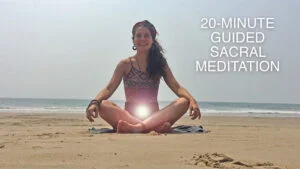
20-Minute Guided Sacral Meditation
What is a Guided Sacral Meditation?
Guided sacral meditation is a practice focused on activating the sacral chakra. This is our second chakra, located about two inches below the navel, just above the root chakra. This energetic wheel is associated with creativity, sensuality, and embracing change.
In yoga, hip opener asanas are key to activating this area. These postures offer a powerful opportunity to set an intention to release old, trapped emotions, memories, and pain. You can even carry this intention into your closing meditation. This way, your time on the mat becomes more than just a physical practice—it transforms into a healing, internal journey.
Since this is a guided meditation, it means you’ll be gently led throughout—so all you need to do is sit or lie down and allow yourself to surrender.
So, put your phone down, turn off your computer, and quiet the never-ending “to-do” list in your mind. This is your time. Everything else can wait. It’s just 20 minutes, and you deserve this time to love and care for yourself. In fact, it may be the most important thing you do today.
Roll out your mat and listen to our guided sacral meditation—you won’t regret it!
If you can’t listen to the audio, don’t worry! We’ve included a written guided sacral meditation below. Yes, we really do think of everything. Enjoy:
Opening Meditation
Lie on your back and come into supta baddha konasana (reclining bound angle). Set an intention for your practice. What would you like to release?
For example, I often focus on releasing my inner critic. I frequently set unrealistic expectations for myself rather than accepting myself as I am. I sometimes believe what I’m doing isn’t good enough. But this simply isn’t true. We are all more than enough, exactly as we are—right now.
So today, my intention is to let go of that pattern.
Now, visualize a time when this habit, emotion, or belief affected you. Recall how it made you feel. Then, remind yourself: you can let it go. Feel that release. Imagine yourself free from it. Feel the lightness.
As you inhale, think “let.”
As you exhale, think “go.”
Take a few long, slow, deep breaths.
You’re now ready to begin your practice. Carry your intention and that feeling of release with you as you move through the asanas.
Closing Meditation
Return to Shavasana (corpse pose). Alternatively, you can return to supta baddha konasana.
Feel your hips. Do they feel looser? What sensations are present? Just observe—no judgment. There’s no right answer. Simply listen to your body.
Now take a long, deep breath. Hold it… and let it go. Visualize any lingering tension leaving your body like a soft grey mist. Return to your natural, rhythmic breath.
Picture a radiant, divine white light above your head. It’s coming closer… expanding… until it surrounds your entire body. You’re relaxing from head to toe. The light fills and shines through you—healing and calming. You’re glowing. You’re one with love and self-acceptance. You are one with this divine light.
Let it guide you to release.
Remember your intention.
Let it go. Let it go.
Remember your truth, your perfection.
Sink even deeper into relaxation.
Stay in silent meditation for 5–10 minutes.
When you’re ready, gently return to your body. Feel the light energize your fingers and toes. Sense your entire body reawakening, preparing for the beautiful day ahead.
Hug your knees to your chest and roll onto your right side. This fetal position symbolizes a new birth—a new version of you after releasing what no longer serves you. Carry this light with you throughout your day. Remember this feeling of lightness.
With eyes still closed, come to a seated position at the front of your mat. Bring your hands into namaskara (prayer) position. Thank yourself and your body for showing up today. Speak one thing you love about yourself. Remember your wholeness and perfection. Gently hug yourself. Find your softness.
Now slowly open your eyes.
It’s a beautiful day.