
Hip Openers – Yoga & Guided Meditation
What Are Hip Openers?
In my 200-hour Yoga Teacher Training in India, Gokarna, with Shree Hari Yoga, I discovered a deep love for hip openers. Now I want to share this practice with you.
But what exactly are hip openers, and what do they mean for your journey?
Yoga can mean many things. For some, it is a powerful workout. For others, it helps calm the mind or improve flexibility. Sometimes it simply feels good, even when you cannot explain why.
One reason yoga feels so nourishing is that the asanas (postures) bring balance emotionally and energetically. Through practice, the chakras — the seven energy wheels along the spine — are stimulated. Because different asanas work on different chakras, each brings unique benefits.
Today, let’s focus on hip openers. These are poses that release tension in the hips while awakening the sacral chakra, located in the lower abdomen, about two inches below the navel.
Benefits of Hip Openers
Hip openers are unique because they not only create physical space in the hips but also encourage the release of stored emotions, old memories, and even pain.
While practicing, you can set an intention to let go of something that no longer serves you — perhaps a painful memory, a limiting belief, a label, a habit, or even a difficult relationship. By combining this intention with meditation before and after practice, you can truly maximise the benefits.
Here’s the truth: yoga is not about perfect poses or extreme flexibility. Instead, it is about uniting your mind, body, and soul with universal consciousness. When you listen to your body without judgment, yoga becomes a moving meditation filled with self-love and awareness.
Sometimes, hip openers bring tears. That is natural. Let them flow and release. It does not matter how far your hips open. What matters is that you find your edge, surrender, and soften.
Opening Meditation
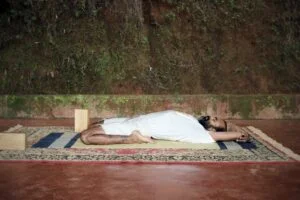
Begin by lying on your back in Supta Baddha Konasana (Reclining Bound Angle Pose). Set a gentle intention for your practice.
What do you want to release today?
For me, I often focus on letting go of my inner critic — the voice that demands perfection and whispers that I am not enough. In truth, each of us is already enough. We are more than enough.
Visualise a moment when this emotion or habit appeared. Notice it, then remind yourself that you can release it. As you inhale, think the word “let”. As you exhale, think “go”. With each breath, feel lighter and more at peace.
Now you are ready to begin your practice. Carry this sense of release with you through each asana.
Example Hip Openers
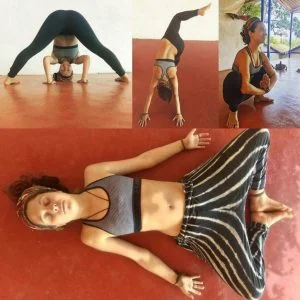
Supta Baddha Konasana (Reclining Bound Angle Pose)
-
Lie down comfortably on your mat.
-
Bend your knees, bring your feet together, and allow the outer edges to rest near your groin.
-
Place your arms beside you, palms facing upward.
-
Exhale and gently tuck your tailbone. Lengthen your spine.
-
On the next inhale, relax your body. As you exhale, allow your knees to fall toward the mat.
-
Notice the stretch in your groin and inner thighs. Stay for at least one minute, breathing slowly and deeply.
Prasarita Padottanasana (Wide-Legged Forward Fold)
-
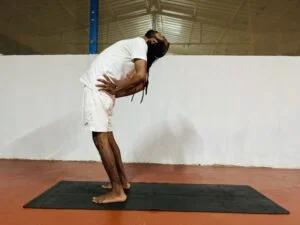
From Tadasana (Mountain Pose), step your feet about 4 feet apart with toes slightly turned inward.
-
Exhale and place your hands on your hips.
-
Inhale to open your chest, then exhale and fold from the hips, placing your palms beneath your shoulders.
-
As you inhale, lengthen your spine; as you exhale, allow the crown of your head to release toward the floor.
-
Press firmly into your feet and lift your hips while bending your elbows slightly.
-
Stay for five slow breaths, feeling your spine lengthen.
To release, inhale and lift your gaze, exhale hands to hips, then inhale back to standing. Well done!
Eka Pada Adho Mukha Svanasana (Downward-Facing Dog Split)
-
Start in Downward-Facing Dog from Tabletop.
-
Push your hips upward, keeping your spine long.
-
Lift your right leg up and back.
-
Bend your knee, open your hip, and let your foot drop over your glute.
-
Look under your left armpit to deepen the stretch.
-
Stay for five steady breaths.
Switch sides and repeat.
Malasana (Garland Pose / Squat)
-
Begin in Tadasana (Mountain Pose), then step or hop your feet as wide as the mat.
-
Bring your hands into prayer position.
-
Bend your knees deeply and sink your hips into a squat.
-
Use your elbows to press your thighs apart.
-
Keep your spine tall and your feet grounded.
-
Hold for at least five breaths, then gently rise back to standing.
Closing Meditation
Return to Shavasana (Corpse Pose) or back into Supta Baddha Konasana.
Notice how your hips feel now. Do they feel softer? More open? Simply observe without judgment.
Take a long, slow breath in. Hold it gently. Then exhale, imagining all tension leaving your body as a mist. Visualise a divine white light above your head, expanding to surround your body. Relax fully into this healing energy.
Stay here for five to ten minutes in stillness.
When ready, gently wiggle your fingers and toes. Bring your knees to your chest, roll to your right side, and slowly rise into a seated position.
With eyes closed, bring your palms together at heart center. Whisper something kind to yourself. Hug yourself softly. Smile.
Finally, blink open your eyes. Carry this lightness into your day.