
SEATED FORWARD BEND POSE AND ITS BENEFITS
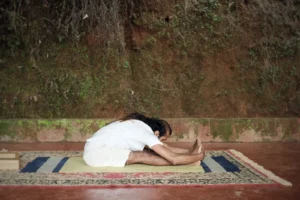
The seated forward bend posture, known as Paschimottanasana (also called “Seated Forward Bend Pose”), involves bending your upper body forward over your legs, with your forehead resting on or below the knees. Your arms stretch forward, holding your wrists beyond your outstretched feet.
Before practicing this pose, it’s best to do a warm-up routine to loosen your spine and hamstrings. In Paschimottanasana, the forward bend shows humility and surrender. It also helps balance your energy centers (chakras) and opens energy channels in the body. This allows you to turn inward and feel more connected to yourself.
This pose also supports Pratyahara, the fifth limb of yoga. Pratyahara means turning your senses inward, away from the outside world.
Steps for Seated Forward Bend Pose
- Sit in Staff Pose (Dandasana) on the edge of a folded blanket. Place your hands on the floor next to your hips. Press your heels away from your body.
- Inhale. As you exhale, bend forward from your hips while keeping your front torso long. Avoid rounding your back—stretch your spine forward.
- Reach your hands forward along your legs. If you can, hold the sides of your feet.
- With each inhale, gently lift your torso. With each exhale, go deeper into the forward bend.
If you’re holding your feet, lift them slightly by bending your elbows outward.
- Hold the pose for 1 to 3 minutes. To release, let go of your feet and inhale while lifting your torso up.
Physical Benefits of Seated Forward Bend Pose
Stretching Muscles
This pose stretches your hamstrings, calves, glutes, pelvis, and back muscles. Bending from the pelvis helps lengthen your spine and makes your back stronger. Holding your wrists beyond the feet also works the shoulders and increases flexibility.
Leaning forward activates the belly muscles. This improves your core strength and supports your knees, hips, and nearby muscles.
Improving Flexibility and Motion
This forward fold stretches the lower back, glutes, hips, and hamstrings.
With regular practice, you’ll gain more flexibility and range of motion. This prepares you for harder poses like:
• Wide-Angle Seated Forward Bend
• Single Leg Forward Bend
• Standing Forward Fold Pose
Breath and Awareness Benefits
Deepening the Breath
Tight belly muscles can make breathing difficult in this pose. But when students open their chest and ribcage and stretch forward, their breath naturally deepens and becomes easier.
Focus and Mindfulness
To keep the back flat and the chest wide, students must stay focused. This builds awareness and concentration. The link between breath, body, and mind helps relax the body and improve focus.
Energy, Relaxation, and Internal Healing
Relaxing with the Breath
Slow, deep breathing in this pose helps release tension from the lower back, hips, and pelvis. It creates space in the spine and allows energy (prana) to flow smoothly.
Stimulating Organs
When the forehead touches the knees, the chest and belly are gently pressed. This stimulates the liver, kidneys, ovaries, and uterus.
The pose also tones the belly organs and supports healthy digestion.
Therapeutic and Emotional Benefits
Healing and Pain Relief
This pose strengthens the lower back, helping with mild sciatica, neck pain, and shoulder tension caused by poor posture.
Emotional Balance
Bending forward in this pose symbolizes emotional surrender. It helps balance the Root, Sacral, and Solar Plexus (Manipura) chakras. These energy centers are linked to inner strength and emotional control.
Each breath in this posture releases stress, helping calm your mind and heart.
Additional Benefits of Seated Forward Bend
• Relieves muscle tension in athletes and runners due to the strong leg stretch.
• Aids weight loss by reducing extra fat from the thighs and belly in Power Yoga sequences.
• Helps relieve migraines due to its calming effect.
Advancing Your Practice
Once students master Paschimottanasana, they can move on to more advanced poses like:
• Seated Straddle Pose
• Trianga Mukhaikapada Paschimottanasana
• Monkey Pose Forward Bend
Contraindications to Seated Forward Bend Pose
Avoid This Pose If You:
• Recently had surgery on your hips or abdomen
• Have injuries in the knees, hips, pelvis, shoulders, rib cage, or spine
Use Caution If You Have:
• Tight hamstrings
• Weak ankles or knees
This isn’t a full restriction but extra care is needed to avoid injury or pain.
Breathing or Health Conditions
Avoid deep practice if there is no awareness of breath-body connection.
People with asthma or breathing problems should practice slowly and only with guidance.
During Pregnancy
Pregnant women should avoid this pose as it puts pressure on the abdomen.