Table of Contents
ToggleHow Yoga Teacher Training Helps in Sleep Meditation Through Yoga Nidra?
Get more relief through sleep, meditation, and learn more about Yoga Nidra in Yoga Teacher Training.
Sleep Meditation helps you release mental worries and relax before going to bed. It involves consistently shifting your focus to bodily sensations. A regular practice of guided sleep meditation has been shown to improve sleep. This is another form of Yoga Nidra, where you naturally drift into sleep during the session. It helps reduce problems related to falling asleep or staying asleep.
In simple terms, it’s a pre-sleep practice that calms both body and mind. To begin, just play sleep meditation music and follow the instructions. The recording gently guides you into deeper relaxation. This is your entry point to Yoga Nidra, a powerful practice requiring focus and consistency—skills you develop through Yoga Teacher Training.
What is Yoga Nidra Sleeping Meditation?
Experts often say that 30 minutes of Yoga Nidra is equal to two hours of deep sleep. However, in-depth understanding comes from continued practice and study. Yoga Nidra affects brain wave activity, helping you experience profound relaxation while staying mentally alert. It’s ideal for beginners in meditation as it brings you to the edge between wakefulness and sleep.
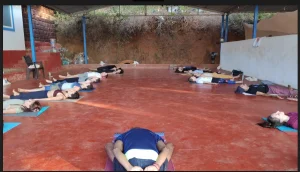
To start, lie down comfortably and follow a guided meditation. It begins with body awareness and controlled breathing, triggering your relaxation response. Yoga Nidra helps balance the sympathetic nervous system and encourages beneficial brain wave states.
Benefits of Sleeping Meditation
Better Sleep = Less Stress + Stronger Immunity
Achieving restful sleep can be tough when you’re battling stress and anxiety. Overthinking at night disrupts rest, but guided sleep meditation helps break this cycle.
Reduces Stress
The goal of sleep meditation is to ease mental and physical tension. By learning to shift focus and fully relax, you improve your ability to fall asleep—and stay asleep.
Live in the Present Moment
Meditation helps bring your awareness to the present. When you lay down at night, repressed thoughts often start spinning in your mind. Controlling these racing thoughts can be difficult, but Yoga Teacher Training teaches you how to manage them effectively.
Supports Your Nervous System
Sleep Meditation clears mental clutter and relaxes your brain. Simultaneously, it calms your nervous system—slowing your heart rate and breathing, preparing you for deep sleep. Many people fall asleep mid-session due to this calming effect.
Relaxes the Body
Yoga Nidra sleep meditation doesn’t force you to sleep—it relaxes your body, quiets your mind, and sleep becomes a natural outcome. You’ll even notice benefits during the day, as better sleep improves your overall function. Just follow the guide or your internal voice.
Sleep Meditation for Healing
People dealing with chronic pain or other medical conditions can use meditation for physical and emotional relief. Some report dramatic healing, while others simply enjoy reduced stress. Various sleep meditation for healing audios are available—just listen and feel the relaxation begin.
Steps to Undertake Sleeping Meditation
If you want to practice Sleeping Meditation, simply follow a guided audio session. This variation of Yoga Nidra for sleep redirects your mind from anxious thoughts. You’ll notice physical sensations such as heaviness, tingling, tightness, or temperature as you go deeper.
While moving your awareness through different body parts, your body relaxes and your breathing deepens. In addition to body scanning, you’ll also experience:
1. Breathing Exercise
The audio may guide you to count your inhales and exhales, signaling your body that it’s time for rest.
2. Gratitude
Yoga Nidra incorporates gratitude, encouraging self-kindness and emotional balance.
3. Visualization
You’ll visualize peaceful scenes, entering a trance-like state—similar to hypnosis—that supports restful sleep.
Yoga Nidra sleeping meditation guides you through four main stages of brainwave activity, ultimately bringing you to the hypnagogic state—a magical moment between wakefulness and sleep. Here, your body rests and your conscious mind transitions into dreams.
Scientific Support for Yoga Nidra Sleeping Meditation
Studies suggest that consistent Yoga Nidra practice can lead to significant improvements. For instance:
-
After six months of Yoga Nidra, 150 women with PMS symptoms showed major improvements.
-
Among 100 women with stress-induced menstrual issues, Yoga Nidra provided noticeable relief.
-
Over 80 college students experienced reduced anxiety and stress.
-
In Yoga Teacher Training, you’ll learn how 30 minutes of Yoga Nidra daily for 90 days helped stabilize blood glucose in diabetic individuals.